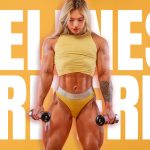
Why Women Need to Train Differently: Understanding the Menstrual Cycle & Fitness
Introduction: Why Women’s Training Needs to Be Different
For decades, most fitness, strength training, and nutrition advice has been based on research done on men. The fitness industry has largely ignored the fact that women’s bodies function differently due to hormonal fluctuations that happen throughout the month.
If you have ever noticed that some weeks you feel strong and energized, hitting personal records in the gym, while other weeks you feel completely drained and unmotivated, you are not imagining things. Your menstrual cycle directly affects your strength, endurance, metabolism, and recovery.
But here’s the problem: most women have never been taught how to train in sync with their cycle. Instead, they follow programs designed for men, which can lead to inconsistent progress, unnecessary fatigue, and frustration.
In this article, we are going to break down:
- Why most fitness research has ignored women.
- The four phases of the menstrual cycle and how they impact training.
- What science is now telling us about women’s strength and endurance.
This is the first part of a multi-part series that will completely transform how you approach training. By the end of this series, you will understand how to train smarter, not harder. And truly work with your body instead of against it.
Why Women Were Left Out of Fitness & Sports Science Research
For years, exercise science and sports performance research focused almost entirely on men. The reason? Researchers found it easier to study men because their hormones stay stable from day to day.
Men’s bodies operate on a 24-hour cycle, meaning their energy, strength, and recovery stay relatively consistent. Because of this, most traditional training programs were built around men’s hormonal rhythms! And, were assumed to work for women as well.
But women’s bodies do not follow a 24-hour hormonal cycle—they follow a monthly cycle with significant fluctuations in estrogen, progesterone, and other hormones. These fluctuations impact energy levels, muscle recovery, metabolism, and even appetite.
For a long time, women were left out of research because:
- Researchers didn’t want to account for hormonal fluctuations.
- Most early studies focused on male military personnel and athletes.
- It was falsely assumed that women would respond to training the same way as men.
As a result, most fitness programs ignore the menstrual cycle completely, forcing women to train in a way that does not fully support their bodies, energy levels, and recovery needs.
However, this approach has major consequences for women. Since women’s hormones shift throughout the month, following a training plan designed for men can lead to increased fatigue, higher injury risk, and slower recovery. This is why many women feel like their training progress is unpredictable—because they are following a system that was never designed for them.
What Science Now Says About Women & Training
The good news? Research is finally catching up. Scientists are now studying how the menstrual cycle affects training adaptations, endurance, and muscle growth, and the results are changing everything we thought we knew about training for women.
One of the biggest ongoing studies is The IMPACT Study, which is testing whether adjusting training based on the menstrual cycle leads to better strength and endurance gains. This study is following 120 well-trained women and comparing:
- Training more intensely in the follicular phase (Days 1-14).
- Training more intensely in the luteal phase (Days 15-28).
- Training with no adjustments.
While the final results are not in yet, other studies have already shown that the menstrual cycle has a direct impact on training.
Key Research Findings on Women’s Training & The Menstrual Cycle
A 2020 study published in the Journal of Strength and Conditioning Research found that women recover faster and experience better muscle growth when training in the follicular phase (Days 1-14). This is because higher estrogen levels enhance muscle protein synthesis, meaning the body is more effective at repairing and building muscle.
A 2022 study published in Sports Medicine found that high-intensity training is more effective in the first half of the cycle compared to the luteal phase. Researchers noted that progesterone, which is dominant in the second half of the cycle, slows muscle repair and increases inflammation, making it harder to recover from high-intensity workouts.
Studies on endurance performance also show that women burn more carbohydrates for energy during the follicular phase and rely more on fat oxidation in the luteal phase. This means that fueling strategies should shift throughout the month to match the body’s changing energy needs.
These findings confirm what many women have already felt but never fully understood—that the menstrual cycle has a direct impact on performance, recovery, and nutrition needs.
The Four Phases of the Menstrual Cycle & How They Impact Your Body
Throughout the month, your hormones fluctuate, creating different internal environments that impact how you feel, perform, and recover.
Menstrual Phase (Days 1-5)
Your period begins, and estrogen and progesterone levels drop to their lowest. This can lead to fatigue, bloating, and motivation dips. Some women feel great and ready to train, while others experience reduced energy.
Follicular Phase (Days 6-14)
Estrogen starts rising, boosting energy levels, endurance, and muscle recovery. This is the phase where many women feel their strongest and most capable.
Ovulatory Phase (Days 15-17)
Estrogen peaks, and testosterone increases slightly, leading to maximum strength, speed, and endurance. However, joint laxity also increases, which may raise the risk of injury.
Luteal Phase (Days 18-28)
Progesterone takes over, leading to higher levels of fatigue, slower recovery, and increased cravings. Many women experience reduced motivation and endurance, making this the most challenging phase of the cycle.
Now that you understand how your cycle influences performance, the real question is… How do you adjust your training and nutrition to work with these hormonal shifts?
That is exactly what we are going to break down in the next article in this series.
Final Conclusion: How to Apply This to Your Training
If you have ever felt frustrated by inconsistent progress, random energy dips, or unexplained fatigue, it might be because you are working against your body instead of with it. Rather than forcing yourself through workouts that feel out of sync with your energy levels, it is time to take a smarter, more strategic approach to training.
Understanding your hormonal cycle is the key to unlocking a training program that actually supports your body.
Instead of following a generic workout plan that overlooks the natural fluctuations in your hormones, women need programs that adjust intensity, recovery, and nutrition based on each phase of their cycle. By making small, intentional changes, you can work with your body’s rhythms rather than feeling like you are constantly fighting against them.
This does not mean completely changing your workouts every single week.
Instead, it is about knowing when to push harder, when to scale back, and when to prioritize recovery. Learning to optimize your performance at the right times allows you to get the best results while avoiding unnecessary fatigue and burnout.
Next Steps: Learn How to Structure Your Training Around Your Cycle
In the next article, we are going to go deep into each phase, breaking down:
- Exactly what’s happening hormonally during each phase
- How this affects your strength, energy, and endurance
- How diet and nutrition should shift throughout the cycle
- How to build a training plan that supports muscle growth, endurance, and recovery
Want to Learn More? Download My Free Guide, Hormones Decoded
If you want to start tracking your hormones and understand exactly how they are impacting your fitness, grab your copy of Hormones Decoded.
📲 Click here to download your free copy now!
Inside, I will walk you through:
✅ What hormone tests to ask for.
✅ How to interpret your body’s signals.
✅ How to use this knowledge to get the best results from your training.