By Roxie Beckles, IFBB Pro, Olympian, and Contest Prep Coach
If you’re a woman in your 40s, 50s, or beyond who has been thinking about stepping on a bodybuilding stage, the NPC Fit Model division might have caught your attention.
Maybe you’ve always wanted to compete, but the muscularity of today’s Bikini division doesn’t reflect the physique you want to build. Maybe you’ve spent years training and you’re wondering whether Fit Model offers a more attainable competitive opportunity.
Or perhaps you simply want to challenge yourself and experience the excitement of getting on stage.
Here’s what I want you to understand: Fit Model can absolutely be worth considering after 40. But a less muscular division is not automatically an easier division, and it isn’t necessarily the right division for your physique.
Let’s talk about why.
What Exactly Is the NPC Fit Model Division?
Fit Model was introduced as an alternative to the more muscular and conditioned physiques currently rewarded in Bikini.
According to the official NPC judging criteria, competitors are expected to display a foundation of muscle, balanced proportions, and an athletic appearance without the same degree of muscular development or conditioning required in Bikini.
Judges look for full, firm glutes without visible glute-hamstring separation, some shoulder roundness without pronounced capped delts, and a conditioned but not excessively lean midsection.
Presentation, symmetry, and overall balance matter enormously.
The important distinction is that this division isn’t simply Bikini with less body fat or a smaller training commitment. It rewards a different physique.
Read the official NPC Fit Model judging criteria.
Why Fit Model Could Appeal to Women Over 40
I’ve coached women entering bodybuilding competitions in their 40s, 50s, and 60s. One thing I’ve learned is that women come to this sport with very different histories and ambitions.
Some have been lifting for decades. Others are discovering resistance training later in life.
For a woman who wants a balanced, streamlined athletic physique rather than significant muscular size, Fit Model may be an appealing option.
There are also Masters opportunities within the division. Depending on the competition, age-specific classes can provide another opportunity to compete alongside women in a similar stage of life.
But being over 40 doesn’t automatically make Fit Model your best division. Your training history, muscular development, structure, and preferred physique still matter.
The Question Nobody Should Ignore: Could You Already Have Too Much Muscle?
This was one of the central questions I raised following the inaugural 2026 Fit Model Olympia.
Shealynn Burnett became the division’s first Olympia champion, establishing an important early benchmark for what judges are rewarding.
As I discussed in my video, I had expected to see slightly more muscular development in the winning standard.
Not Figure-level muscularity. Not even today’s Bikini look. Just a little more visible fullness and development.
But here’s the dilemma.
Imagine spending five or ten years building your shoulders, legs, and glutes. You love your muscularity. You’ve invested considerable time developing it.
Now imagine discovering that some of those same qualities might make you less competitive in Fit Model.
Would you be willing to deliberately reduce muscle you’ve spent years building simply to meet a division’s expectations?
As a coach, I would never recommend making that decision casually.
Your chosen division should complement your long-term physique goals, not require you to abandon everything you enjoy about your body.
A Closer Look at the 2026 Fit Model Olympia Lineup
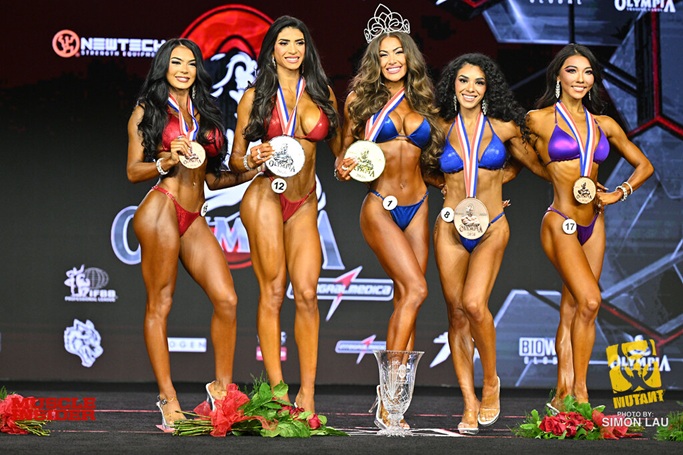
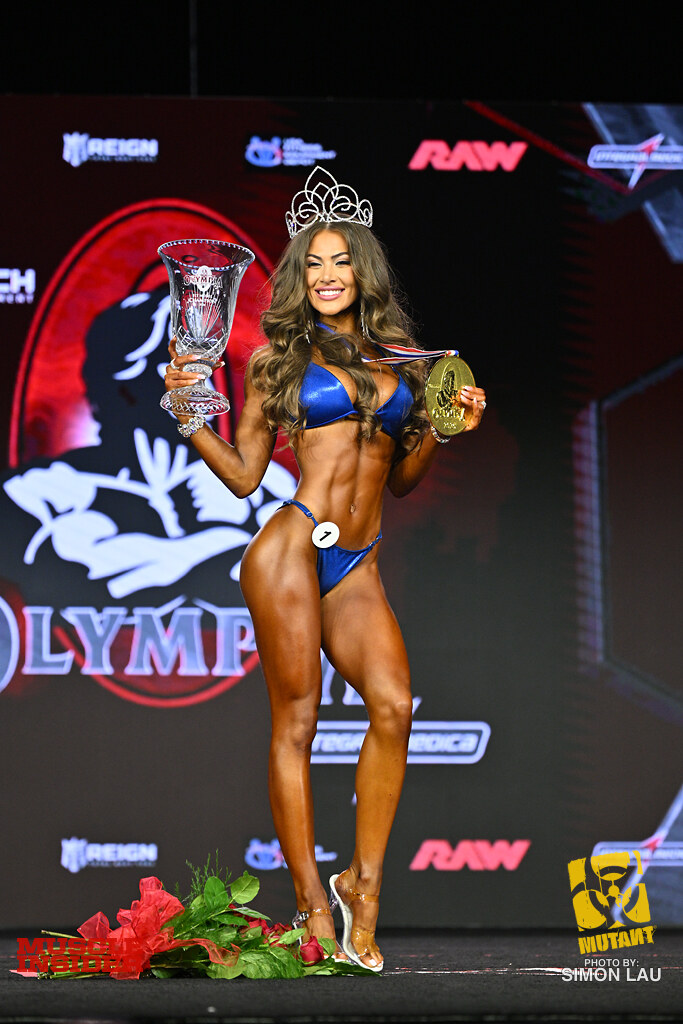
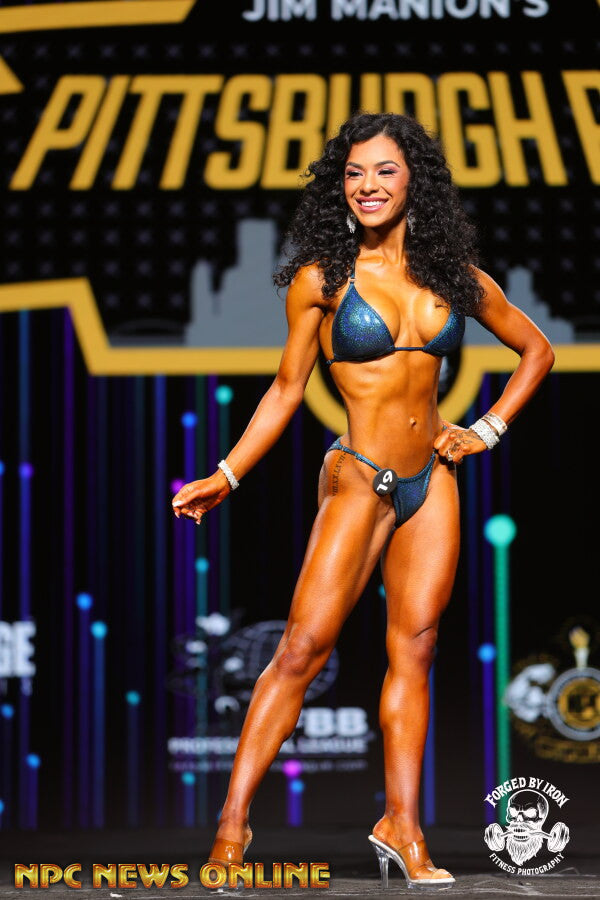
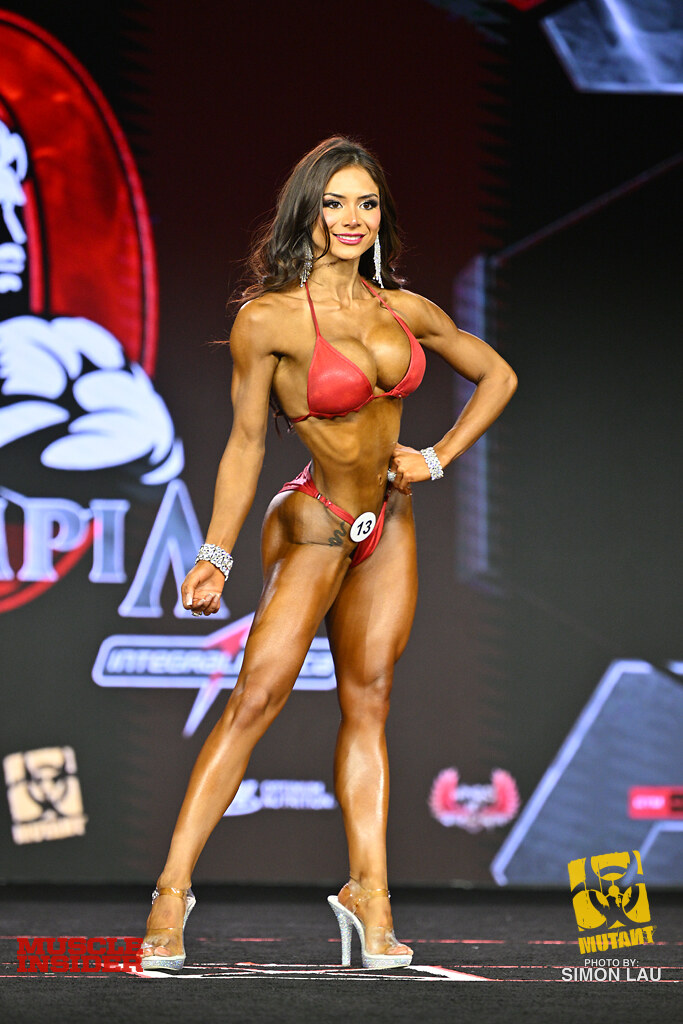
Rather than assuming one physique represents all competitors, it’s worth comparing the actual lineup. According to the official IFBB Pro League scorecard, the top three were Shealynn Burnett (first), Gabriela Queiroz (second), and Jane Jones (third). Carla Andrea Reyes Vargas placed seventh.
The Top Three: Physique Comparison
Shealynn’s image is from the Olympia, while Gabriela and Jane are photographed at earlier 2026 pro shows. These portraits illustrate their physiques, while the group photograph above shows the Olympia medalists together.
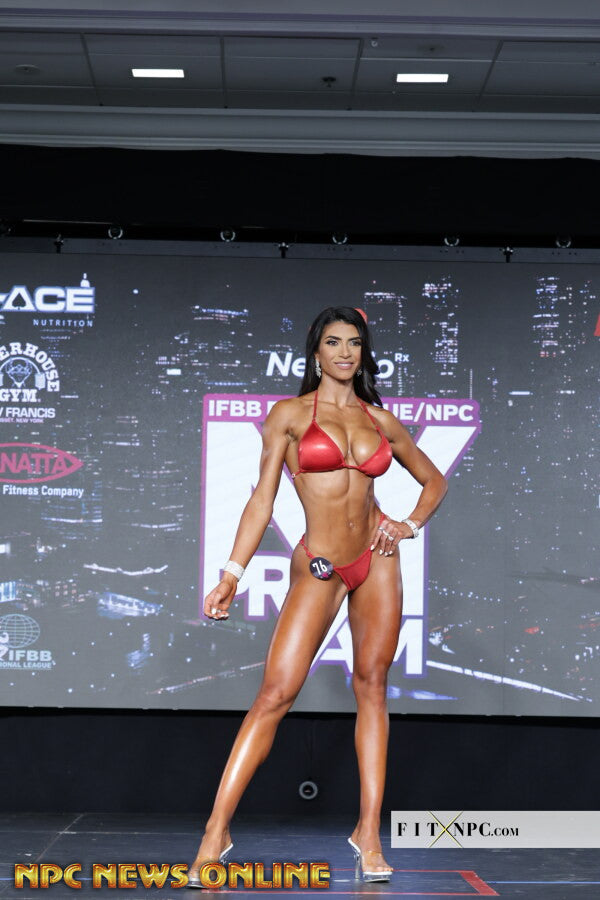
Here’s my personal observation: Carla’s physique was one I particularly liked. To my eye, she represented a slightly more muscular direction that I could see Fit Model exploring in the future. That is my preference, not a claim about how the judges will score future competitions.
Does Fit Model Make Contest Prep Easier After 40?
This is where I want women to be especially careful.
A softer judging standard does not eliminate the demands of contest preparation.
You still need structured training, appropriate nutrition, effective posing, and careful management of your body composition.
You still need sufficient recovery.
For women navigating perimenopause, menopause, demanding careers, family responsibilities, or changing recovery needs, preparation has to account for those realities.
And although Fit Model competitors generally carry more body fat than their Bikini counterparts, that doesn’t mean competition preparation is automatically healthy or without risk.
Stage condition is temporary. It isn’t an everyday health goal.
Good coaching means evaluating whether the preparation process is appropriate for your body and your life before choosing a show date.
What About Competing Naturally?
After the Olympia, champion Shealynn Burnett responded to my analysis with an important perspective about natural bodybuilding. Read my follow-up commentary on Shealynn’s response for the full discussion.
This is an important part of the Fit Model conversation.
The division’s less muscular standard may be attractive to women who want to pursue bodybuilding without performance-enhancing drugs.
But there is an important distinction between a physique standard that may be attainable naturally and a competition that formally tests competitors for prohibited substances.
The two aren’t interchangeable. Read the designated NPC/IFBB Pro natural contest rules if drug testing is important to your decision.
Natural athletes have different genetic structures, training histories, and levels of muscular development. There is no single physique that defines what every natural woman can achieve.
That is why choosing a division should always involve an honest evaluation of your individual potential rather than assumptions about what natural athletes must look like.
Is Fit Model Worth It If You’re Not Trying to Turn Pro?
Absolutely, it can be.
You don’t need to pursue a professional card to have a meaningful bodybuilding experience.
For some women, the goal is to stand on stage for the first time, demonstrate their discipline, celebrate their progress, and accomplish something they’ve dreamed about for years.
That’s a legitimate goal.
But even recreational competition requires preparation, money, time, and an understanding of the judging criteria.
Competition registration, coaching, posing, stage attire, travel, and presentation expenses can add up. Those commitments deserve consideration before you choose a show.
What If Your Goal Is to Become a Professional Competitor?
Then the conversation becomes more specific.
We need to evaluate whether your physique is suited to the competitive standard, how much development you still need, and whether your desired trajectory aligns with the division.
We also need to study actual competition lineups, judge feedback, and the standards being rewarded.
You cannot build a realistic competitive plan around hoping the division will eventually change.
How Do You Know If You’re Ready?
Before committing to a Fit Model competition, I would encourage you to answer a few questions.
What kind of physique do you genuinely want to develop? Does that physique resemble the current Fit Model standard? Are your nutrition and training habits consistent? Can your schedule, health, and recovery support a contest prep? And most importantly, are you pursuing competition because you love the challenge, or because you’re hoping a stage placing will validate your worth?
Those answers will tell you more than simply asking whether you’re old enough, young enough, muscular enough, or lean enough.
My Final Thoughts
Fit Model has the potential to become a wonderful competitive opportunity for women over 40.
I support having more options for women who love bodybuilding but don’t necessarily want to pursue greater muscular size.
However, no division is right for everyone.
The best choice is the one that aligns your current physique, future goals, competitive ambitions, and long-term well-being.
And if you’re not ready today, that doesn’t mean the opportunity has passed you by.
It may simply mean your smartest next step is building a stronger foundation.
Thinking About Your First Competition?
Before choosing your division or setting a show date, I want you to understand what contest prep actually involves.
My free Roxstar Fitness Contest Prep Crash Course walks you through the preparation process, training and nutrition considerations, and the decisions you need to make before stepping on stage.
Get Free Access to the Contest Prep Crash Course
You can also explore my Masters Contest Prep Coaching for Women Over 40 if you’re considering personalized guidance.