For decades, women have been told that carbs are the enemy.
Cut them low, skip the bread, pass on the pasta, and you’ll lose the weight — right?
Wrong.
For women in their late 30s, 40s, and beyond, especially through perimenopause and menopause, that old-school advice can completely backfire. Your body changes during this stage, and what worked in your 20s or early 30s simply doesn’t work the same now.
When estrogen begins to decline, your metabolism becomes more sensitive to stress. And stress isn’t just emotional — it’s physiological. Cutting carbs too low is one of the biggest stressors you can place on your system.
Why Your Body Needs Carbs More Than You Think
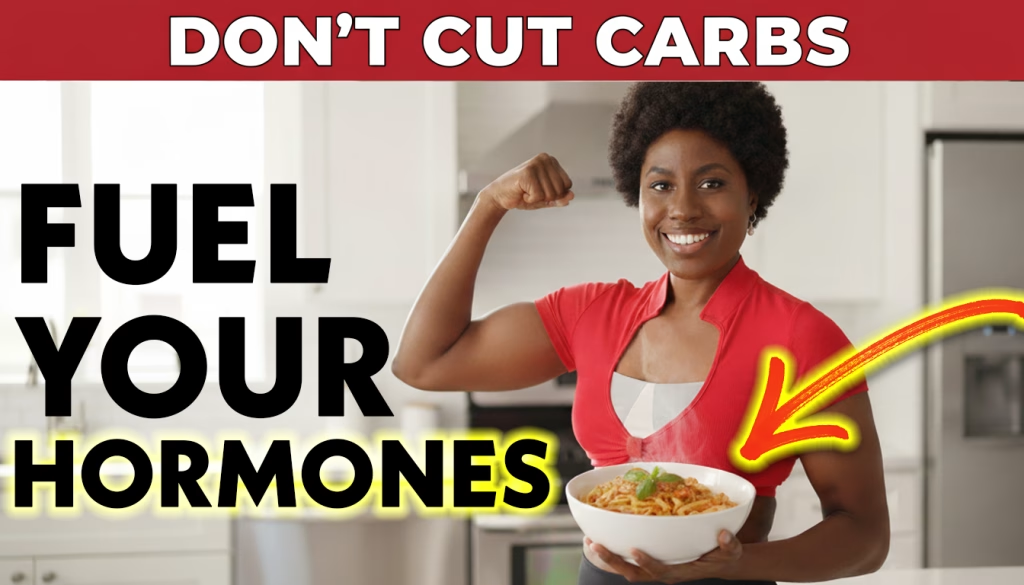
Carbs are not the villain. They’re a vital source of fuel that supports your metabolism, hormones, and energy levels — especially when you’re training.
Here’s what happens when you slash them too low for too long:
1. Your thyroid slows down.
Your thyroid is the thermostat for your metabolism. When you cut carbs drastically, your body lowers production of T3 (the active thyroid hormone) to conserve energy. That means slower metabolism, colder hands and feet, fatigue, and weight loss that stalls no matter how hard you work.
2. Your cortisol spikes.
Low-carb diets elevate cortisol, your primary stress hormone. Elevated cortisol can lead to water retention, poor sleep, irritability, and stubborn belly fat. It also makes your body hold onto fat instead of burning it — especially around your midsection.
3. Your estrogen and insulin get out of sync.
As estrogen declines, your body’s sensitivity to insulin can shift. Carbs become trickier to handle — not because they’re bad, but because how and when you eat them now matters more. Eating carbs strategically keeps your blood sugar stable and helps your body stay hormonally balanced.
4. Your muscles can’t perform or recover.
Muscle tissue runs on glycogen, which comes from carbs. When glycogen stores are empty, you’ll feel weak, sluggish, and sore. Recovery suffers, muscle growth slows, and your metabolism tanks because you’re burning out the very tissue that keeps it high.
Carb Timing for Hormone and Fat Loss Balance
The key isn’t cutting carbs — it’s controlling timing and portioning them around your needs.
On training days:
– Eat the bulk of your carbs before and after your workout.
– Pre-workout: A small serving of easily digestible carbs (like half a banana or some oats) gives you the energy to train hard.
– Post-workout: A balanced meal with protein and carbs (like grilled chicken and rice, or a protein shake with fruit) helps replenish glycogen, reduce cortisol, and jumpstart recovery.
On rest days:
– Scale carbs slightly lower since you’re not depleting glycogen as much.
– Focus on fibrous veggies, moderate starchy carbs at one or two meals, and keep protein steady.
Before bed:
– A small portion of carbs in the evening can actually help you sleep better by supporting serotonin production and lowering nighttime cortisol.
– Examples: Greek yogurt with berries, or a small portion of oatmeal with almond butter.
What Kinds of Carbs Work Best
Not all carbs are created equal. Focus on slow-digesting, nutrient-dense sources that give your body steady energy without blood sugar spikes:
- Oats
- Quinoa
- Sweet potatoes
- Berries and fruit
- Brown or white rice
- Whole grain bread or wraps
- Beans and lentils
And yes — you can absolutely have things like pasta or bread occasionally. What matters is portion size, context, and consistency, not perfection.
The Real Secret: Balance, Not Restriction
The truth is, your body’s not broken. It’s just responding to the stress you’ve put it under.
When you learn how to fuel your body instead of starving it, everything changes.
>Your energy comes back.
>Your mood stabilizes.
>Your workouts actually feel productive again.
Carbs, protein, and healthy fats all have their place — the art is knowing how to use them together in the right ratios for your unique hormonal rhythm.
A Smarter Way to Lose Fat After 40
If you’re ready to stop fighting your body and start working with it, your next step is to rebuild your nutrition with intention. That means finding the balance between discipline and nourishment — the sweet spot where your metabolism, hormones, and results all align.
👉🏿 Read the full guide here: How to Rebuild Your Metabolism and Tone Up After 40