A lot of fitness advice starts and ends with how you look.
Lose weight. Build muscle. Tighten this. Shape that. And sure, those goals can matter. I know they matter to a lot of women because they’ve mattered to me, too.
But I don’t want the only measure of a good training program to be what you see in the mirror.
Can you carry your groceries without getting winded? Can you get down on the floor and back up? Do you feel steady, strong, and capable in your own body? And if you compete in bodybuilding, are you still thinking about the woman you are when you’re not onstage?
That’s why I created PEAT: Physique Enhancing Athletic Training.
PEAT helps women build their physique while also training for strength, stamina, control, and movement. It’s for women who compete, women who enjoy bodybuilding as a hobby, and women who simply want to feel stronger and healthier.
You don’t have to choose between looking good and being able to move well. We can train for both.
What does PEAT mean?
PEAT brings together two goals:
- Physique enhancing: building or maintaining muscle and shaping your physique.
- Athletic training: developing strength, control, coordination, stamina, and the ability to move with confidence.
And “athletic” doesn’t have to mean playing a sport or jumping onto a box. It means building physical qualities that help you move through your life with more confidence.
That might mean:
- Getting stronger.
- Building muscle.
- Improving your stamina.
- Moving with better control.
- Supporting your mobility and balance.
- Training in a way that helps you feel more capable.
This is about more than adding exercises to your workout. It’s about asking a bigger question: What do you want your body to be able to do?
Bodybuilding is more than the stage
I love bodybuilding. I’ve competed, coached women through contest prep, and seen what it takes to bring a physique to the stage.
But the stage is one moment. It is not the whole story.
If you compete, your training should support your goal for the show. But it should also recognize that contest prep has an endpoint. You are a person before the show, during the show, and long after the stage lights go out.
You can love bodybuilding and still care about:
- How you move.
- How you feel.
- How you recover.
- What you can do outside the gym.
- Your strength and confidence beyond contest day.
And if you don’t want to compete, you don’t need a stage goal to take your training seriously. Maybe you want to lose body fat, build muscle, feel stronger, or simply feel more at home in your body. Those are real goals, too.
Fitness is more than how you look
Aesthetic goals are easy to see. You can look at a photo, a measurement, or a stage presentation.
But some of the most meaningful progress doesn’t show up in a picture.
It might be:
- Carrying something heavy with more confidence.
- Having more stamina during your day.
- Moving with better balance and control.
- Feeling stronger in the gym.
- Building a routine you can keep.
- Learning to appreciate what your body can do.
Strength training can also be part of supporting muscle and bone health as you get older. Fitness isn’t only about trying to make your body smaller or more defined. It can help you build a body that supports the life you want to live.
That doesn’t mean you have to stop caring about how you look. It means your appearance doesn’t have to be the only thing you care about.
Your body is more than a list of flaws
A lot of women come into fitness feeling like their bodies are a problem to solve.
There’s always something to fix. A stomach to flatten. A number to lower. A part of the body to hide.
I understand wanting change. I have physique goals, too. But I don’t want training to become another way to punish yourself for having a body.
You can work toward change and still respect yourself along the way. You can train hard without treating your body like an enemy.
That’s what I mean when I talk about building an honor for your body. You’re not pretending you have no goals. You’re remembering that your body is more than the parts you wish looked different.
The five phases of PEAT
PEAT has five phases:
- Stabilization and Muscular Endurance
- Stabilization-to-Hypertrophy Hybrid
- Hypertrophy
- Selective Maximal Strength
- Power and Athletic Performance
These phases are tools for planning training. They are not a strict five-step ladder everyone has to climb in the same order.
You may spend more time in one phase. You may repeat a phase, combine qualities, or skip a phase that doesn’t fit your goals. Your training history, technique, recovery, schedule, and needs all matter.
Your age does not automatically decide your phase. Neither does menopause, your weight, or whether you’ve competed before.
The question is: What would help you most right now?
Phase 1: Stabilization and Muscular Endurance
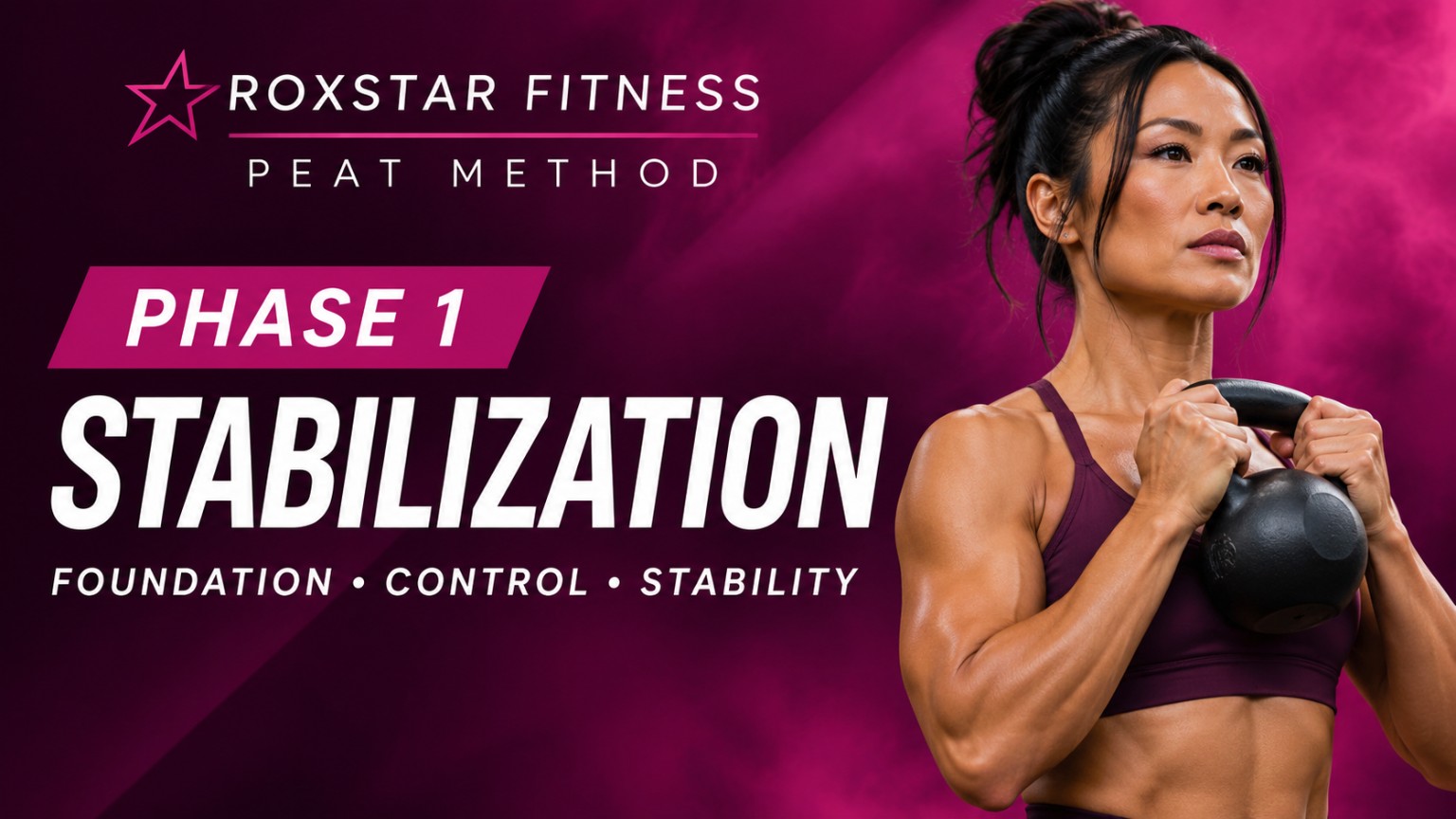
This phase helps you build control and confidence with your training.
It can be a good fit if you’re:
- New to structured resistance training.
- Returning after time away.
- Rebuilding consistency.
- Working on control or coordination.
- Ready to establish a stronger foundation.
You may see higher repetitions, manageable loads, and a focus on performing the movement with control. Sometimes that means working in a range of 15 to 25 repetitions, if that makes sense for the exercise and for you.
The point is not to force 25 reps or make every exercise harder than it needs to be. The point is to develop repeatable movement and a tolerance for training.
And no, “stabilization” does not mean every exercise needs to happen on a wobbly surface. We’re not trying to make your workout look like a circus act. We’re trying to help you move well and build capacity.
Phase 2: Stabilization-to-Hypertrophy Hybrid
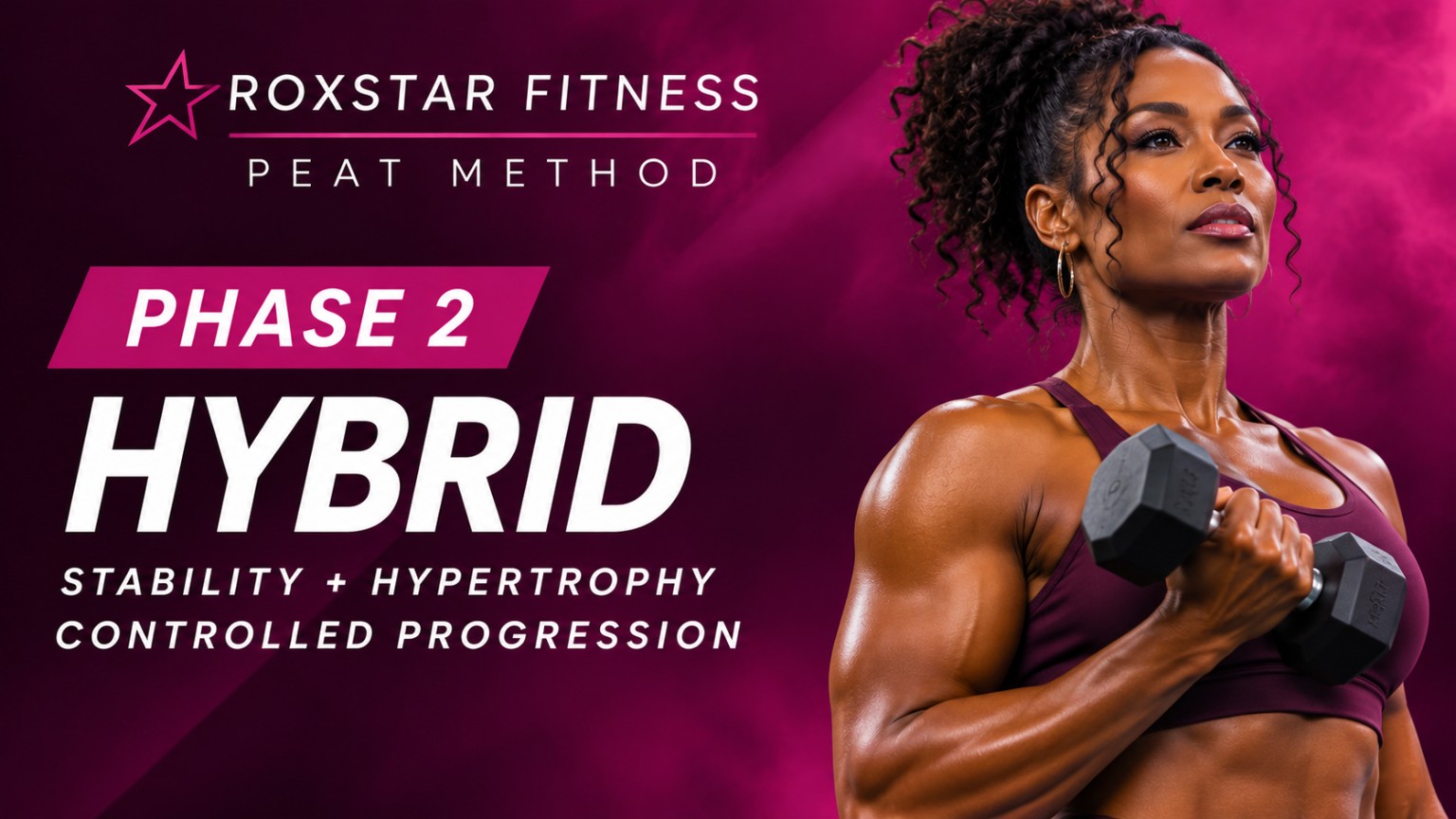
This phase is a bridge between controlled foundational work and a stronger muscle-building focus.
You can keep practicing control while taking on more resistance or more challenging work. Some exercises may stay in higher rep ranges, while others move toward more traditional muscle-building work.
This can make sense when you’re ready for more challenge but want to build up gradually.
Progress might mean:
- Adding a few repetitions.
- Increasing the load slightly.
- Improving your control with a familiar weight.
- Adding a little more productive work.
It doesn’t automatically mean adding more exercises or more training days. More is not always better. We want the training to be challenging and useful, and we want you to recover from it.
Phase 3: Hypertrophy
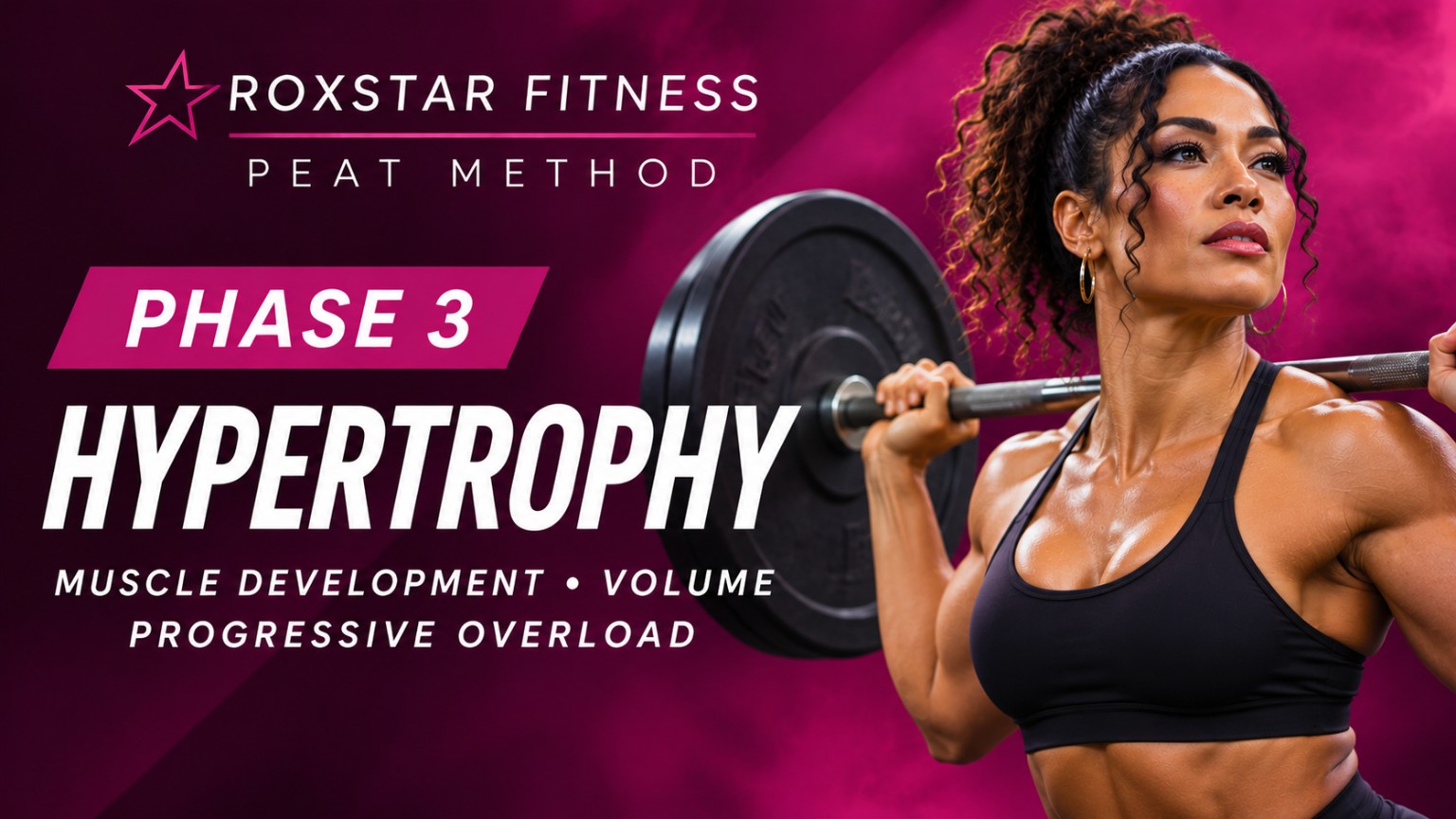
Hypertrophy means muscle growth. This phase is often central for women who want to build their physique, develop certain muscle groups, or maintain muscle while losing body fat.
The focus is on providing enough productive work to challenge the muscles, then allowing time and recovery for your body to respond.
That might include:
- Planned working sets.
- Repeating useful exercises long enough to track progress.
- Gradually increasing repetitions, resistance, or training volume.
- Choosing an effort level you can recover from.
There isn’t one magic rep range that works for every exercise or every woman. Good muscle-building training depends on the whole plan, including exercise selection, effort, total work, nutrition, and recovery.
And let’s be clear: being sore is not proof that your workout was effective. You don’t have to be wrecked after every session to build muscle.
Phase 4: Selective Maximal Strength
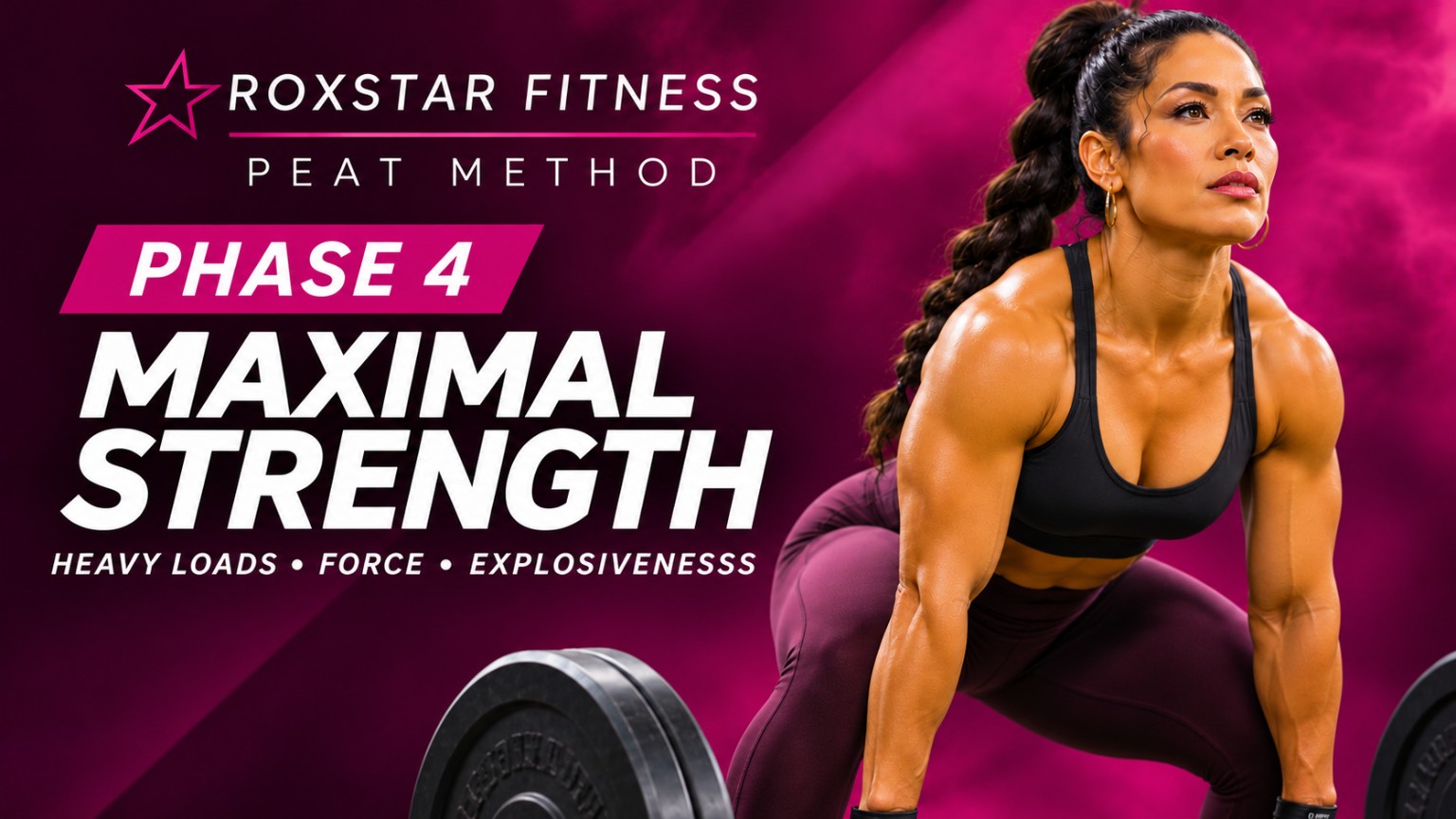
This phase gives certain exercises or muscle groups a stronger focus on high-force strength.
The word selective matters. It doesn’t mean every lift has to be heavy, and it certainly doesn’t mean everyone needs to test a one-rep max.
A strength-focused block may use lower repetitions and heavier resistance for selected movements. You’ll usually need more rest between those sets to keep your technique and effort consistent. Other exercises in the program can stay in more moderate rep ranges.
This phase can be useful when:
- You have a solid foundation in the movement.
- Strength is a specific goal.
- The exercise suits your needs.
- You’re ready to manage the extra demand.
You can build strength without constantly lifting near your maximum. The right approach depends on you, not on what looks impressive in the gym.
Phase 5: Power and Athletic Performance
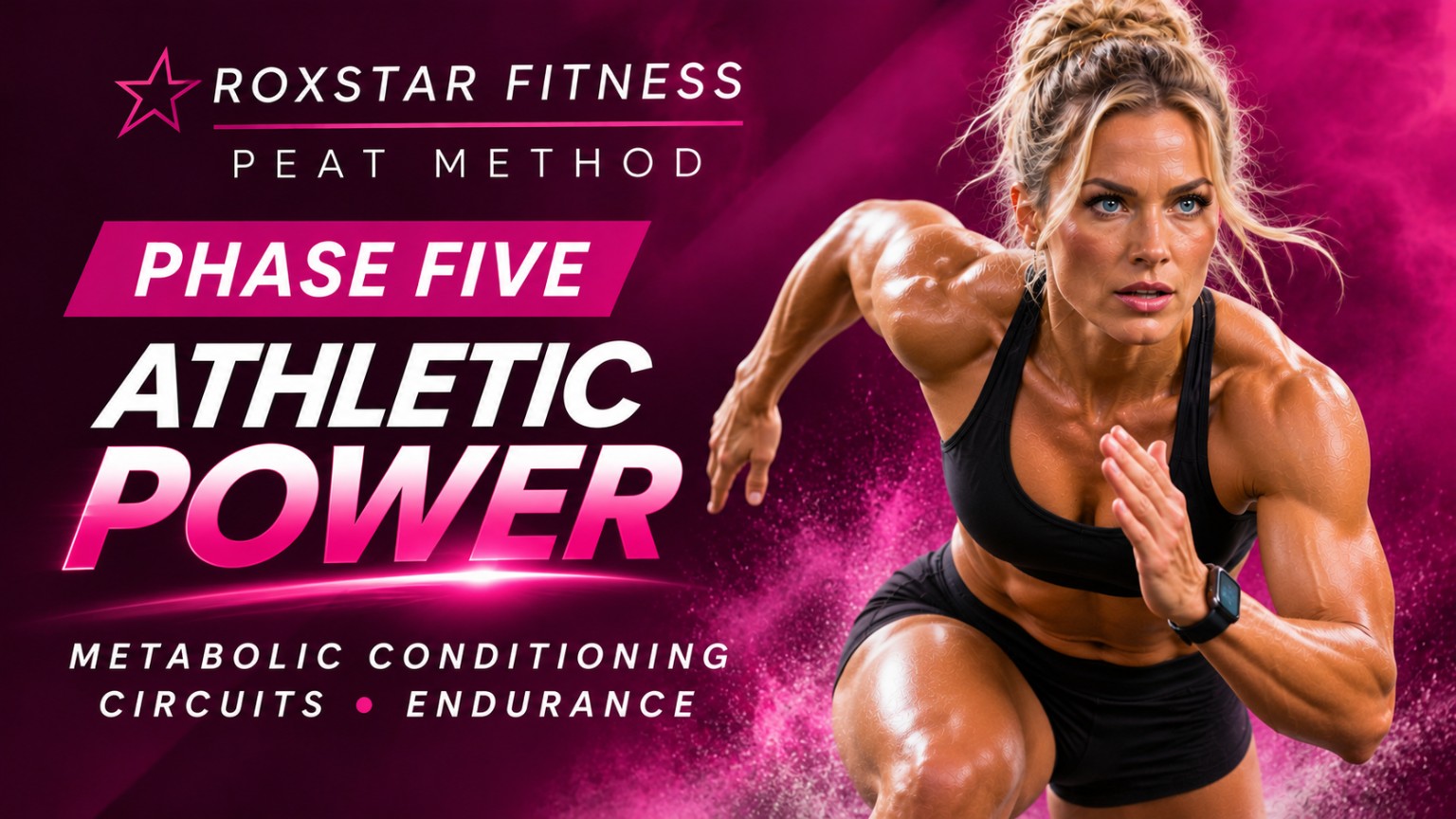
Power is about producing force quickly. It’s different from just moving fast until you’re exhausted.
Depending on your experience and goals, this phase might include carefully selected explosive movements, throws, or other athletic drills. It can also be adapted to lower-impact options. Not every woman needs to jump or sprint to train athletic qualities.
Conditioning can be part of your program, too. But conditioning and power are not the same thing:
- Conditioning helps you sustain or repeat work.
- Power training focuses on producing force quickly while maintaining movement quality.
The right exercises depend on your coordination, training history, comfort, and goals. If your speed or control starts to fall off, that’s a sign to stop the set. We’re training athletic ability, not just collecting exhaustion.
Your training split is not the phase
A training split tells you how your workouts are arranged during the week. The PEAT phase tells you what qualities the program is emphasizing.
For example:
- Two or three days a week might work well with full-body training.
- Four days might be arranged as upper-body and lower-body sessions.
- Five days may fit someone with the experience, schedule, and recovery to support it.
But the split alone doesn’t tell you what the training is doing. A four-day upper/lower split could emphasize hypertrophy, strength, or a mix of qualities.
The schedule has to fit your actual life. Your work, caregiving, sleep, nutrition, stress, and recovery all matter. If the plan looks great on paper but you can’t follow it, it isn’t the right plan.
How PEAT helps you train for the long term
I’ve coached women at different stages of training, including women preparing for bodybuilding shows and women who want to build muscle without competing.
One thing I’ve learned is that the best program isn’t the one that looks the most impressive on paper. It’s the one that fits the woman doing it.
That means asking:
- What do you want from your training?
- What can you do comfortably and confidently right now?
- How are you recovering?
- What does your schedule allow?
- What do you want your training to support outside the gym?
Your physique goals belong in that conversation. So do your strength, stamina, mobility, confidence, and health.
PEAT gives us a practical way to think about those goals and plan your training. The phases help organize the work, but the program still has to make sense for you.
Find the phase that fits you now
You don’t need to figure out your entire training future before you begin. Start by asking what would help you right now.
Are you building confidence with resistance training? Ready for more muscle-building work? Want to focus on getting stronger? Interested in adding athletic movement or conditioning?
Your next training step
Ready to map out your training?
Use my Training Split Planner to explore a weekly schedule that fits your goals and your life. It can help you identify a useful starting point and think through what kind of training structure may work for you.
Your body is not a renovation project with a deadline. You can want to change your physique and still respect your body along the way. You can train seriously without making appearance the only measure of success.
Whether you ever step onstage or not, you deserve training that helps you feel stronger, more capable, and more at home in your body.