The RoxStar Journal
Practical fitness, thoughtful perspective, and strength for real life.
There are a lot of people calling themselves fitness coaches these days. And I’m going to say something that might ruffle a few feathers: just because someone has a great body, a massive social media following, or impressive before-and-after pictures doesn’t necessarily mean they know how to coach another human being.
I’ve been working in the fitness industry since 1997. I’ve watched trends come and go, seen training philosophies repackaged as revolutionary breakthroughs, and watched online coaching become an enormous industry.
Technology has made coaching more accessible. It’s allowed me to work with women around the world. But it’s also made coaching attractive to people who see dollar signs before they see the person they’re supposed to help.
When you hire a coach, you’re trusting that person’s knowledge and judgment about your body and health. You may also be bringing years of frustration, insecurity, failed diets, and disappointment into the relationship. That’s a tremendous responsibility. So here are six red flags I look for, and what I think good coaching should look like instead.
1. They Take a Cookie-Cutter Approach Without Considering Your Individual Needs
First, let’s clear something up. There’s nothing inherently wrong with templated workout programs. I use templates myself. Experienced coaches know there are only so many ways to organize good strength training: squats, hinges, presses, pulls, progressive overload, appropriate volume, and recovery. There’s nothing new under the sun. It’s science, but it isn’t rocket science.
For most people, a well-designed program based on established principles works beautifully. A coach doesn’t need to invent a new collection of exercises every time someone signs up. Templates can save time and free a coach to focus on the things that really require professional judgment.
When a Template Stops Being Coaching
But here’s where I draw the line. A template becomes cookie-cutter coaching when the coach refuses to look beyond it. Two women might follow the same basic split, but one has knee problems and another has limited shoulder mobility.
One might recover well, while the other struggles with fatigue. Their exercise selections, progressions, or training volume might need to differ.
That’s individualization. It doesn’t necessarily mean inventing everything from scratch. It means paying attention. The program exists to serve the client, not the other way around.
Know What Level of Coaching You’re Buying
Consumers also need to be realistic. If you’re paying $30, $50, or $100 a month for a workout library, you shouldn’t expect the same personalized attention as someone paying several hundred dollars for private coaching. That time and expertise have value. There’s nothing wrong with affordable programming. Just understand the offer you’re buying.
But if a coach promises individualized programming, they need to deliver it: monitoring progress, considering feedback, and adjusting as appropriate. You shouldn’t have to fight to be treated as an individual. A template is a tool. It shouldn’t be an excuse to stop thinking.
2. They Starve You Into Losing Weight
This one gets under my skin. I’ve worked with women who came to me after months of extremely restrictive diets, sometimes paired with enormous amounts of exercise. They’re exhausted, hungry, struggling to concentrate, and barely recovering from their workouts. But the scale is moving, so apparently that’s supposed to mean everything is working.
Listen, it’s not particularly difficult to make someone lose weight by drastically restricting food. That doesn’t mean you’re doing a good job coaching them.
Why I Don’t Start by Slashing Calories
I’ve had women come to me eating so little that my first concern isn’t how to get another five pounds off. It’s how to establish an appropriate nutritional foundation so they can function, train, and recover. Sometimes that means increasing calories before considering another fat-loss phase.
Now, I’m not saying that eating more automatically causes fat loss. Energy balance matters. Fat loss generally requires an appropriate calorie deficit. What I mean is that you need enough nourishment to support the body you’re asking to do the work. I would much rather start a client with more food and adjust as needed than slash calories to the floor on day one.
Why? Because I want somewhere to go. If someone’s already miserable on a very low intake, what happens when progress slows? Am I supposed to keep cutting food indefinitely? At some point we need to recognize that the approach itself may be the problem.
As weight changes, energy needs and activity can change, hunger can increase, and recovery can become harder. Prolonged inadequate energy availability can affect hormonal function, bone health, and performance. Especially for active women trying to maintain muscle while losing fat, these are serious considerations.
I don’t want my clients becoming smaller at the expense of strength and lean tissue. I want them stronger, healthier, and more capable. Sometimes the most responsible thing a coach can say is, “We’re not cutting your calories any further.” The best decision isn’t always the one that produces the fastest scale change.
3. You Have Little or No Meaningful Interaction With Your Coach
We live in a world where I can have a face-to-face conversation with someone halfway around the globe without leaving my living room. So I find it strange when people pay for supposedly personal coaching and never have a meaningful conversation with the person they’re working with.
Not every program needs weekly Zoom calls or unlimited messages. Some people want a structured plan they can follow independently. Others need regular accountability and personal guidance. Both are legitimate. But if someone is selling you a coaching relationship, there should be an actual relationship somewhere in the equation. Not just an automated welcome email and months of silence.
What Meaningful Access Looks Like
For my VIP clients, Zoom conversations and personal interaction are a major part of the service. I want to know what’s happening with their training, nutrition, and lives, because what happens outside the gym has a tremendous impact on what happens inside it.
My more affordable All-Access membership is a different level of service, with structured programs, resources, and community forums. It’s not private coaching, and I don’t pretend it is. But there is still a way to ask questions and connect within that service.
What bothers me is someone building a business around their personality and supposedly unique method, then making themselves completely inaccessible to the people paying for it. I don’t care how famous you are. If you’re selling coaching, be clear about what access actually means. Nobody is so important that the people supporting their business should be treated as an inconvenience.
The Human Element in the Age of AI
I use artificial intelligence in my own business. I’m not opposed to it. It helps me organize information, work efficiently, and streamline tasks. But there’s a difference between using technology to support professional work and using it as a substitute for professional responsibility.
An AI system can help organize workouts, explain nutrition concepts, and process data. It cannot fully replace the lived experience, accountability, judgment, and genuine relationship that an experienced coach brings.
When a client tells me she’s struggling, I’m not just processing data points. I’m listening to a human being. I’m thinking about her history, personality, circumstances, and our conversations, drawing on decades of experience to help determine what makes sense.
Technology can help us. It shouldn’t erase the person. And I think that distinction is only becoming more important.
4. They Lack Empathy and Genuine Care for Their Clients
Think about that. When someone is motivated, following the plan, sleeping well, and making progress, coaching can be straightforward. You monitor, adjust, and keep things moving. Wonderful. But what happens when things aren’t going well?
What happens when a client is dealing with a demanding job, family responsibilities, poor sleep, financial stress, or a difficult season? When she misses workouts or stops losing weight? That’s when a coach earns their money.
I’ve seen attitudes in this industry that treat struggling clients as lazy, undisciplined, or unwilling to work. And yes, sometimes clients need to take greater responsibility. I believe in discipline and accountability.
But accountability and humiliation aren’t the same thing. There’s a difference between challenging someone to rise to a higher standard and making her feel worthless because she’s struggling.
Accountability Without Humiliation
If a client isn’t following a plan, my first question isn’t automatically “What’s wrong with you?” It’s “What’s happening?” Is the plan too demanding? Is recovery poor? Is the nutrition unrealistic? Does she understand the assignment? Are there circumstances we haven’t addressed?
Sometimes she needs to make different choices. Other times I need to make a better coaching decision. Sometimes it’s both. That’s what working together looks like.
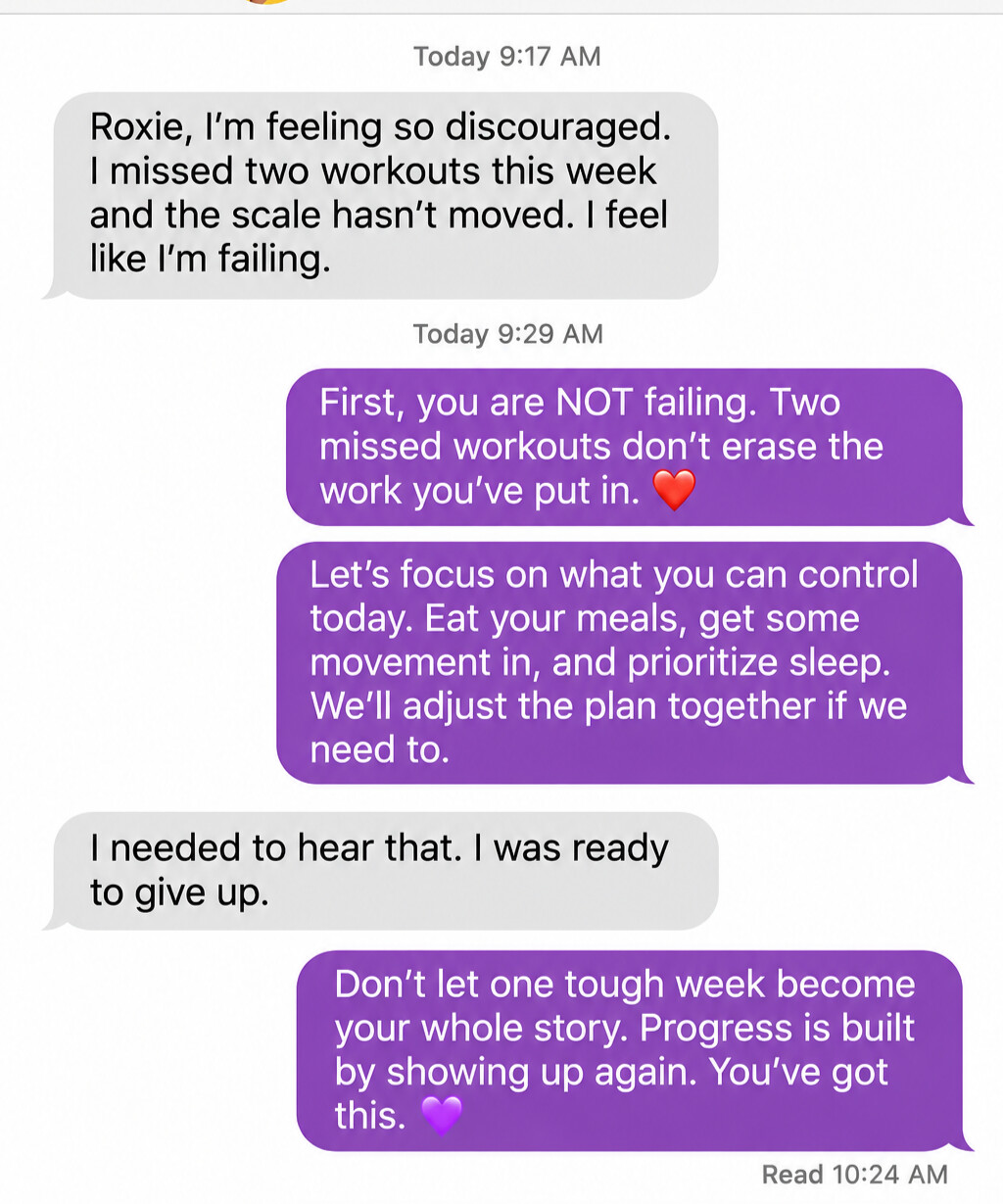
When coaching becomes primarily about personal branding and money, it’s easy to turn a client into a subscription, testimonial, or transformation photo. But the people I work with have families, responsibilities, struggles, and aspirations beyond fitness. Their dignity matters. I can challenge a woman without belittling her, and hold her accountable without forgetting she’s human.
Empathy isn’t the absence of standards. It’s the ability to uphold those standards without losing sight of the person you’re helping.
5. They Rely on Excessive Cardio to Compensate for Poor Programming
I’m not anti-cardio. Cardiovascular exercise is wonderful for heart health, endurance, and overall fitness. Endurance athletes naturally have different needs from someone focused on strength and body composition. But when I see a woman prescribed endless cardio alongside a severely restrictive diet, I start asking questions.
There’s a difference between using cardio strategically and using it as a blunt instrument. I’ve seen programs that essentially amount to eating as little as possible and exercising as much as possible. Yes, that might produce weight loss. But at what cost?
Excessive exercise volume combined with insufficient energy intake can compromise recovery, performance, muscle retention, and health. In some women, prolonged low energy availability can also contribute to hormonal and menstrual disturbances. That’s not something we should dismiss as the price of getting lean.
The Right Amount, Not the Most
How much strength training is she doing? How active is she already? How is she recovering? How much is she eating? What are her goals? Does she actually need more cardio, or does she need a better plan?
A knowledgeable coach should explain why a certain amount of exercise is prescribed, rather than adding another 30 minutes every time the scale stalls. The goal isn’t to force someone to tolerate the maximum amount of work.
It’s to find the appropriate amount that produces progress while allowing recovery and adaptation. More isn’t automatically better. Better is better.
6. They Never Teach You How to Succeed Without Them
This might be the most overlooked red flag. A coach can help you lose 30 pounds or completely change your physique. But what happens when the coaching relationship ends? Can you structure a workout? Understand the basics of nutrition? Recognize when your habits are slipping and make reasonable adjustments? Or are you lost without someone telling you exactly what to do?
I’ve always believed one of my responsibilities is to educate my clients, not just instruct them. Maintaining physical changes over time requires continued attention to the behaviors that produced them.
That doesn’t mean following the exact same diet or workout forever. Your needs, schedule, and goals will change. But the underlying principles don’t disappear when you reach your goal weight.
Too many people approach weight loss as a temporary project. They follow a plan for 12 or 16 weeks, reach a number on the scale, and assume they can return to all their old habits. Long-term regain is common, though exact rates vary by population, intervention, and follow-up period.
Rather than throwing around a frightening statistic, I’d rather ask: What are you learning during the process that will help you maintain your results afterward?
Teaching Habits That Last
That’s why I emphasize actions, habits, behaviors, thought patterns, and mindset. Actions are the things you do. Habits are actions practiced consistently. Behaviors are how you respond to situations and make decisions. Thought patterns shape how you interpret setbacks and progress. Mindset influences how you approach the whole process over time.
A woman who learns to navigate a difficult week without abandoning her routine has gained something valuable. So has the woman who understands how to adjust her nutrition when her activity changes, or who no longer sees one missed workout as complete failure. Those lessons can matter more than the number on the scale on a Tuesday morning.
There’s nothing wrong with working with a coach for years. I have clients who value the accountability, expertise, structure, and relationship. But I want them to continue because they choose to, not because I’ve failed to teach them how to function without me.
How to Vet an Online Fitness Coach Before You Hire Them
First, do your homework. And I don’t mean 15 minutes scrolling Instagram before handing over your credit card. Follow their work for a while. Read their articles. Watch their YouTube videos. Subscribe to their email list. Pay attention to how they explain things and whether they recognize that people have different needs.
Look at education, certifications, experience, testimonials, and client transformations. But remember that testimonials are marketing materials. They don’t tell the whole story, and in an age of AI, images and endorsements can be manipulated. Look for consistency over time. Does this person seem thoughtful, professional, and genuinely interested in helping people?
Have a Conversation Before You Commit
Personally, I wouldn’t hire someone for ongoing private coaching without having a conversation first. Twenty or thirty minutes can be enough to discuss their methods, services, communication policies, and realistic expectations. They should be willing to answer reasonable questions.
That doesn’t mean a free consultation is an opportunity to demand an entire custom workout or nutrition plan. Evaluating a professional and expecting free professional services are two different things. Respecting each other’s time matters.
Here’s what I tell prospective clients: the best time to schedule a consultation is when you’ve done your research and are genuinely prepared to make a decision. Not when you’ve already decided yes, but when you’re in a position to say yes if the conversation confirms it’s a good fit. Understand the service and general pricing first. Make sure the commitment is financially realistic. Then come ready to ask your questions.
Maybe you’ll discover that the coach is exactly what you’re looking for. Maybe something doesn’t feel right. That’s valuable information too. A good consultation should help you make an informed decision, not pressure you into one. And if someone is irritated by reasonable questions about a significant commitment, I’d consider that another red flag.
The Bottom Line: Good Coaching Is About More Than Results
I love what I do. After nearly three decades in this profession, I still get tremendous satisfaction from helping a woman accomplish something she once thought impossible. But some of the most meaningful moments have very little to do with dramatic before-and-after pictures.
Sometimes it’s the woman who finally understands that she doesn’t have to starve herself. Sometimes it’s a client who stops treating every setback as a personal failure. Sometimes it’s a woman who walks into the gym, picks up a weight, and knows exactly what she’s doing.
Yes, results matter. People hire us because they want change. But how we help them achieve it matters too. The process should leave someone better equipped to care for herself, not depleted, discouraged, or completely dependent on someone else.
In a world where technology can automate almost everything, there’s increasing value in a professional who takes time to listen, think, care, and connect. Coaching isn’t simply knowing what to prescribe. It’s knowing how to help the person who has to live with that prescription.
You’re not just paying someone to tell you what exercises to do or how many calories to eat. You’re trusting another human being to help you change your life. And that trust should mean something.
By Roxie Beckles, IFBB Pro and founder of RoxStar Fitness. Coaching women since 1997.